RSS Feed

Author Archives: Women's Fiction Writer

Author Jenny Gardiner Talks About Her Publishing Journey and Writing Across Genres

As author Jenny Gardiner mentions below, it seems like we’ve known each other forever, so it’s exciting for me to have Jenny here, sharing her story with all of you.  She does it all, as you’ll see.

Please welcome Jenny to Women’s Fiction Writers!

Amy xo

Author Jenny Gardiner Talks About Her Publishing Journey and Writing Across Genres

Thanks so Amy much for having me visit today. It seems we’ve known each other from the writing world for such a long time! And certainly there has been a real sea change in publishing since we started out!

So you wanted me to talk a bit about my bad habit of writing across genres ;-) . I say bad because nowadays I think it might not be the most beneficial career plan to spread myself so thin. Always my goal has been to “brand” myself, but I saw it as branding my voice, regardless of what type of book I was writing. However with digital publishing, it seems to be more incumbent than ever to build a loyal readership, which seems to work best when you stay in your genre, and better still if you’re writing series books in which you can keep your readers happy with more stories in that setting.

But the thing is I’m a writer as well as a storyteller, and I love to tell stories in whatever I write. Perhaps since I came up as a journalist, I’ve always just written, not considering that I needed to hone in on one thing. And maybe that’s been a good thing, it’s broadened my horizons and given me a wider readership in some ways than I’d have otherwise not had: the more the merrier, right? But the more I study and research what seems to work best for authors, the more I think that perhaps I need to work on continuity and doing so by sticking with one thing.

But darn it, I’m always coming up with ideas, and I hate to table them just to fit a mold, right?! So I suppose the reality is I’ll just keep on writing what I want to write, figuring that I’ll find readers or my readers will find me if I’m lucky!

But I’ll talk a little bit about where I came from and how I found myself where I am right now. As Amy knows my first novel was a finalist in the Dorchester Publishing/Romantic Times American Title III contest, and ultimately won. The prize was a publishing deal. That novel, Sleeping with Ward Cleaver, was really more mainstream commercial women’s fiction, or maybe even chick lit, but ultimately because of the contest was shelved as romance. Part of that was the typical issue with bricks and mortar stores of where to shelve a book. As I was trying to sell other novels to New York houses, I kept pitching a memoir idea I had with my first agent. She never responded to me when I suggested we try to sell it. But my next agent thought it had potential, so she shopped it around. That book (which I originally titled Bite Me!) is Winging It: A Memoir of Caring for a Vengeful Parrot Who’s Determined to Kill Me (sort of like Marley & Me with a deadly beak), which came out in hardback with Simon & Schuster’s Gallery Books a couple of years ago.

So after we got fabulous rejections from  rejections from editors for Slim to None, my book seemed doomed to lurk in the deep recesses of my computer for the rest of eternity. But then digital publishing came along, and I decided it made sense to give it a go in what was going to prove to be a new world order. I’d been an early adapter to the Kindle and LOVED mine, so knew that these e-readers would be HUGE, eventually. Once the price came down. When I heard that Apple was planning to launch this new product called an iPad I knew that was going to radically change the world of publishing for good because that would cause a price war, reducing the price of the product, making it available for lots of people, which would be great for authors breaking away from the “old skool” way of publishing books. Plus it led Amazon to want to woo authors into their corner, which led to a whole lot of authors being able to earn an actual living as writers because they actually paid legitimate royalties. Fabulous. And so I then decided to take all of the books that I had in my computer that for whatever reason I wasn’t inclined to pitch to New York houses because they weren’t integral to my branding, and sell themselves direct to my readers. Because I figured my readers would be happy to find more fun books to read. Which brings me back to trying to decide what makes sense these days as an author. And I keep flipflopping. Because I want to write and publish all sorts of things. In fact my next book I’m putting out (hopefully in the next few weeks!) is an anthology of essays, titled Naked Man on Main Street. And I hope readers will seek it out. But I’m giving serious thought to writing some contemporary romance series because it would be fun to write and because it would help bring in a whole new world of readers. And maybe when I do that I’ll contemplate whether to direct the rest of my focus on commercial women’s fiction, or maybe a hint of romance, or humor, or…Stay tuned (would you, please?!)

website: www.jennygardiner.net

twitter: https://twitter.com/#!/jennygardiner

Facebook: https://www.facebook.com/jennygardinerbooks

SLEEPING WITH WARD CLEAVER:  What happens after the happily ever after, when protagonist Claire Doolittle discovers that her Mr. Right has turned into Mr. Always right…

SLIM TO NONE:  New York’s premier food critic Abbie Jennings is outed in a picture on Page Six of the New York Post, meaning she can no longer do her job incognito. This is compounded by the fact that years of fine dining have added a little, shall we say, avoirdupois, which means she’s large enough she can’t go incognito. Her editor gives her six months to lose weight or she’s out of her dream job. All of a sudden Abbie learns she must stop eating in order to continue eating for a living.

ACCIDENTALLY ON PURPOSE:  Photographer Lucy McSweeney has given up on finding the right man and has turned to the turkey baster to give her the baby she’s always wanted. Sparks fly when she has a chance encounter with the man she doesn’t know is her sperm donor. And things get a little crazy when she’s hired to photograph is upcoming society wedding.

COMPROMISING POSITIONS: Mercedes Fortunato gets way more than she bargains for when she lands her dream job on Capitol Hill against the wishes of her boss Mike Garrity, forced to hire her by his boss, a horny US Senator who’s set his sights on Mercedes. Mike grudgingly agrees to work with Mercedes and protect her from the lecherous senator, and things heat up when they realize maybe they aren’t quite the enemies they thought they were. Throw in a little corruption, a protective Italian family, and the FBI and someone’s bound to end up in trouble.

ANYWHERE BUT HERE: Mary Kate Dupree has been spinning her wheels for too long. Trapped in an abusive marriage to an overbearing good ol’ boy, she finally decides to break the cycle when she heads out to pick up her husband’s dry cleaning and instead picks up a handsome hitchhiker. They impulsive set off on a road trip of self-discovery, peeling away layers of their dark pasts en route to Niagara Falls, but once there, will they tape the leap?

WHERE THE HEART IS: Reese Larkin had given up on her ever going home again, until she realizes that home is the only place she’ll ever be able to reclaim what’s most important to her. After a call from a long-lost friend, she decides to embark on a road trip to revisit her past and along the way comes to realize that home really is where the heart is.

WINGING IT: A MEMOIR OF CARING FOR A VENGEFUL PARROT WHO’S DETERMINED TO KILL ME: Think of it is Marley & Me, with a deadly beak ;-)

I’M NOT THE BIGGEST BITCH IN THIS RELATIONSHIP:  I’m a contributor in this humorous dog anthology, featuring a top-tier list of authors, including a forward by Chelsea Handler’s dog Chunk. 50% of royalties go to the Humane Society of the US.

Pinterest for Novelists: Can Pinterest Inspire Your Writing? By Author Laura Harrington

Today’s a great day for Women’s Fiction Writers!  Not only is my friend, author Laura Harrington, back to share her wisdom on all things Pinterest, but today is the paperback launch for her novel, Alice Bliss.  The new cover is just spectacular and evocative. I’d totally pick it up in a bookstore, if I didn’t already have it on my iPad, that is.  If you haven’t read Laura’s series of posts on revisions, check them out by clicking the link at the bottom of this post.  And if you haven’t read Alice Bliss — now’s a great time!

Please welcome back Laura Harrington!

Amy xo

Pinterest for Novelists: Can Pinterest Inspire Your Writing?

by Laura Harrington

When I first started hearing about Pinterest I reacted with a sense of doom. My first thought was, are you kidding me? There’s something else we’re supposed to be doing to connect to our readers/ build our platform? I felt that I didn’t have one more iota of available brain space for anything that was not actually writing.

And then my writing hit a snag.  I was about half way through my second novel when I slowed to a halt.  I felt stuck and stale and tired. Had I lost my writing mind to too much Twitter and Facebook and all the rest of it?

Or did I need some inspiration? Did I need to find a place where I could play?

I am a very visual person. Part of this is from my theatre background; part of it is my lifelong love of design and image. I was an art history minor in college and worked at a museum and in a prints and drawings gallery for two years between college and grad school.

I decided to take a look at Pinterest, to see if I could use it as a place to spark my imagination for my new book.  When I began I had no idea where it would lead me, nor did I know how addictive it could be. (Warning!)

And yes, I agree with some of the criticisms leveled at Pinterest. It can be a glorified form of hoarding, many of the images have the gloss and emptiness of advertising, and lots of people use it simply to collect things: recipes, cute kitten photos, outfits. But it can also be as inspiring as exquisite paintings, cool old vintage photos, pure color washes, birds, clouds. Some boards feel like too much sugar to me. Some boards draw me in and inspire me. I especially like finding artists from other cultures to follow.

What is Pinterest?

Pinterest is a virtual corkboard where you can pin just about any image, being careful about attribution of course.

Where in the world do you begin?

The Next Book:

I started with a catch-all board, titled “The Next Book” and pinned any image that struck me as being part of the world of my next book, which is set in 1966 and 1970. Using key words I searched for images of Viet Nam, black and white photos of kids from that period, peter pan collars, Simplicity patterns, sewing notions, lakes, swimming, lakeside docks, cars, trucks, farmhouses.  That “catch-all” board continues to be one of my favorites because of its variety. It never fails to draw me into the world of the book and spark my imagination.

Soon, however, my searches were becoming more specific and so were my boards. I started to get organized. Here are a few examples:

Field Journals:

Two of my characters keep field journals with a particular interest in birds. But field journals turns out to be the most delightful of categories: here you will find pencils, drawing tools, beautiful handmade books, pages from field journals, watercolor wash techniques, etc.

Espaliered Apple Trees:

The father works with apple trees at the Cornell Agricultural Station in Geneva, NY, and is experimenting with the French espaliered method.

Books for the Next Book:

My research titles.  You could also use a board to pin research articles, magazine clippings, etc.

Birds:

One of my characters is a bird artist who becomes a helicopter pilot in Viet Nam. These are the birds he might see or draw or be inspired by.

Billy/ Nell:

The primary relationship is between a brother and a sister. They are wild children, alive in nature. Finding images to capture their unique spirit is challenging and fun.

Are these images helping with my writing? Absolutely. The world of my book is deepening, becoming richer. My imagination has been shaken up and unlocked. Energized and inspired, my book has taken an entirely new direction.

Here are a few other ways that authors might use Pinterest:

Book Trailers:

A young woman is creating a book trailer for my first book, Alice Bliss, to launch when the paperback launches.  She sent me her initial cache of images and I realized that these ideas, which looked great on paper, were not quite capturing the spirit of the book.

Pinterest to the rescue. I created a board for Alice Bliss/ The Book Trailer where I could easily share my ideas with her: She can pin images to this board as well.  It’s a great place for us to test out ideas as she storyboards the book trailer.

Book Design:

As I worked to find images that capture the spirit of my books, I found myself thinking about book design.  Perhaps one of the future uses of Pinterest will be as a place for authors to share their visual ideas with book designers. I love collaborating with designers and I am fascinated by their process. In no way do I want to take over or intrude upon that. But I do think that the author’s understanding of the visual world of their book is useful information for a designer to have.

My intuition tells me that Pinterest is going to have a powerful impact on book covers. Using boards to share images, looking at images and cover ideas online, where most covers will be seen, testing to see if the cover “reads” in a very small format, might very well enhance the process of design and give us ever more beautiful and striking covers.

In conclusion:

Pinterest is not for everyone. Just the fact that it means spending more time in front of a computer screen was enough to keep me away from it initially.  Now, however, I find I have to limit the time I spend there by setting a kitchen timer.  It is so easy to get lost down that rabbit hole.  But I have found it to be refreshing, to be a place where I can play and have fun, where I can find inspiration.  Perhaps best of all, I can disappear into visual beauty, and take a rest from words, words, words all the time.

How do you use Pinterest?

If you’d like to take a look at the boards that I’ve referenced, above, just click on this link: http://pinterest.com/laurharrington/

Laura Harrington’s award-winning plays, musicals, and operas have been widely produced across America, in Canada, and Europe. She is the 2008 Kleban Award Winner for most promising librettist in American Musical Theatre. Harrington has twice won both the Massachusetts Cultural Council Award and the Clauder Competition for best new play in New England.

Her first novel, Alice Bliss, (Viking/ Penguin) has been lauded as a “Discover Great New Writers” at Barnes & Noble, “Best Books of the Summer” at Entertainment Weekly, a “People Pick,” at People Magazine and “Best Books of 2011” by the School Library Journal. Foreign rights have been sold in the UK, Italy and Denmark

Alice Bliss has been named a “Must-Read” book in the annual Mass Book Awards, 2012, and has been chosen by the Richard and Judy Book Club in the UK, where it will be featured in all WH Smith Book Shops throughout the summer.

Laura teaches playwriting at MIT where she was awarded the 2009 Levitan Prize for Excellence in Teaching. She has also been a frequent guest artist at Tufts, Harvard, Wellesley, and the University of Iowa.

Read more at:

Books: www.lauraharringtonbooks.com

Theatre: www.laura-harrington.com

REVISIONS: BY LAURA HARRINGTON – 3 GREAT POSTS THAT WILL GIVE YOU IDEAS FOR EDITING AND POLISHING YOUR NOVEL!

Author Tamra Wilson Says Short Stories Are Big Things In Little Packages And Explains How 64 Rejections Can Be Inspiring

As many of you know, I’ve written and published a number of short stories — so when I cyber-bumped into Tamra Wilson’s book, DINING WITH ROBERT REDFORD, which is a collection of short stories that are definitely women-oriented, I couldn’t wait to have her on the blog. 

Please welcome Tamra to Women’s Fiction Writers!

Amy xo

Author Tamra Wilson Says Short Stories Are Big Things In Little Packages And Explains How 64 Rejections Can Be Inspiring

Amy: DINING WITH ROBERT REDFORD is a collection of short stories — we’ve never featured a short story author or collection on WFW before, so this is very exciting. What draws you to writing short fiction?

Tamra: It’s been said that the short story is the sprint of writing; the novel the marathon. I tend to be impatient, so sprints bring a quicker sense of accomplishment. I like finishing things, checking them off my list, so for me, novellas and novels are far more daunting, scary really. They’re the hard-core investments. I have to be in love with a character to be willing to live them for a couple of years to see how their story ends up. A lot of characters aren’t that interesting or loveable.

Short stories, on the other hand, are like tough little charms that must be reckoned with. String several finely crafted ones on a bracelet and you have an intriguing collection. Maybe that’s their underlying appeal for me as a reader and a writer. They wear well and don’t bog me down.

Amy: I’ve written short stories and it’s no easy task (ok, no writing is easy). What sets short story writing apart from novel writing besides the length of the finished piece?

Tamra: Stories are big things in small packages. You don’t have the wiggle room to explore multiple themes or juggle many characters. Such tight space can be a liability for the long-winded, but an asset for the brief. I believe a sharp pen is the birth mother of the short story. It’s hard to kill clutter, get to the heart of the matter and exit a messy situation cleverly, but that’s the art of short fiction.

What’s left out is as important as what’s left. The writer spins the pony on stage, lets it bump around a while and then reins it all in with a taut lasso. It’s nothing short of magic. A good story will make you cheer. A great story will leave you breathless.

Amy: Short story writing is daunting for some. What’s your best advice for a writer who’d like to give it a try?

Begin with a vision and a purpose. Where are you going with this character? What’s at stake and why does it matter? Beginners should base stories on actual events, then play the “what if” game and let the imagination take over.

Amy: From where (or from whom) do you draw the best inspiration for your stories?

Tamra: Real life inspires me. Some of my best work has evolved from such mundane things as telephone calls, anecdotes, diary entries and off-hand comments. It took me a good while to learn that some of the most interesting material springs from ordinary stuff.

Amy: We agreed that your collection of stories fits under the umbrella of women’s fiction. How do you define women’s fiction?

Tamra: Well-written women’s fiction is by and about women, but not necessarily for women alone. The message transcends gender. Almost always, family and romance are involved with women’s stories, not that these stories are “soft” or “sweet.” Family and romance seldom are.

Amy: What’s your best advice for writers who’d like to publish short stories?

Don’t get in a hurry. Write what you love and make sure it’s ready before you send it out. Every good story will eventually find a home. Ann Hood told me that once, and she’s been a success in this business for a long time.

Now let me tell you a story about my story “Saving Amy,” a fiction based on a family incident during a polio epidemic. First out of the gate, it was a finalist for the Elizabeth Simpson Smith Short Story Contest. Encouraged, I kept sending it out again and again.

Sixty-five rejections and five years later it was accepted by The Healing Muse, a journal of SUNY-Upstate Medical Center.

Why didn’t I give up after 64 rejections? Because I was willing to keep trying for as long as it took. To be honest, it became something of a game to see where Amy would be turned away next. Thanks to the good editors in Syracuse, she finally checked in to the hospital, which is as it should be, the story being about illness.

This ended Amy’s losing streak but not my story. One of my mentors, who had helped revise earlier drafts, asked to use Amy as a “case study” with her students. And so it goes.

Tamra Wilson grew up in the small farming town of Shelbyville, Illinois, but has called North Carolina home for more than 30 years. Her work has appeared in some 60 literary journals, magazines and anthologies such as the North Carolina Literary Review, Epiphany, The MacGuffin, Grist, Pedestal and elsewhere.

A Fellow at the Virginia Center for the Creative Arts, she was part of the 2002 Blumenthal Writers and Readers Series and has received grants funded by the North Carolina Arts Council and Vermont Studio Center. She received the Jesse Stuart Prize for Young Adult Fiction 2009. She is a graduate of the University of Missouri School of Journalism and holds an MFA degree from the Stonecoast Creative Writing Program at the University of Southern Maine. She lives in Catawba County, NC.

Tamra’s website: http://tamrawilson.com/

Buy the book: http://www.amazon.com/Dining-Robert-Redford-Other-Stories/dp/0984639853

The Truth About Writer-Moms By Author Lauren Baratz-Logsted

If you don’t know Lauren Baratz-Logsted, you should! She writes women’s fiction, chick-lit, YA and middle grade books. She’s also a kick-ass editor and I should know because she helped me with an early version of what now The Glass Wives.

And, as you may have guessed, she’s also a mom!

Lauren’s “nice guy romance novel”, The Bro-Magnet, has catapulted to the top of the Kindle charts (as I’m typing this, it’s #2!) and lucky for you — it’s FREE until Sunday, May 20th.  Here’s the link so you can check it out yourself: THE BRO-MAGNET on Amazon. 

Congratulations Lauren!  

If Nothing Is Actively Crawling, The Place Is Clean Enough

by Lauren Baratz-Logsted

Recently, the Working Mom v Stay-at-Home Mom debates got a rehearing in the press. There’s one group that is often ignored in these things, the gray area where people like me reside: the Work-at-Home Mom. I’m a specialized kind of work-at-home mom. I am a writer.

Writers can be funny people. Often, you’ll hear women who are writers – or more properly, women who want to be writers – say, “It’s impossible to get it all done. I don’t have time to write because I’m too busy taking care of my family.”

Here’s the thing about lots of writers: They’ll find any excuse not to write.

Here’s the thing about me: I’m not like lots of other people.

True confession time: I am an indifferent housekeeper and an absentee cook. My motto regarding the former: “If nothing is actively crawling, the place is clean enough”; regarding the latter: “The microwave is my friend.”

The way I achieve balance is through multitasking whenever possible. While pregnant with my daughter, I read those books that say you should talk to your baby as much as possible – in the womb and out – to encourage language acquisition. The problem with being a writer is that when you spend whole days in a basement cave alone, silently pouring words out onto the page, you are not necessarily big on talking aloud. This means that the idea of making baby babble was out for me. Instead, when my baby was still inside me, I read Proust to her (no wonder she likes cookies); and a few months after she was born, when she started on solids, I used to read the Letters to the Editor from the New York Times, doing different accents for whichever state or country the letter writer was from, while feeding her in her high chair (no wonder her vocabulary is so good that at age six, she told me the problem with Amelia Bedelia is that “she takes things too literally”). Arguably the greatest multitasking feat I ever accomplished was writing the first draft of an entire novel, Vertigo, while breastfeeding. Obviously I didn’t do this all in one session. Since I was breastfeeding on the left while typing on the right, it resulted in a lopsided look for a time, but at least my child got fed and the book got written.

The best advice I ever got about mothering was from a friend who doesn’t even have kids. While I was still pregnant with what I knew was going to be a daughter, my friend told me, “The best gift you can give your daughter is the model of a strong woman pursuing her dreams with joy and determination. That way, when she grows up, she won’t feel she needs the world’s permission to do the same.”

I have done that.

This does not mean that there is not the occasional twinge of guilt. Occasionally, I ask my daughter, “Wouldn’t you rather have a different kind of mommy? You know, one of those cooking-and-cleaning mommies?” To this, she invariably replies, “No, I want the mommy I have.” Here’s the thing, the best thing of all: She is proud of what I do for a living and she has always known how deeply she is loved.

No, you can’t have it all. You can’t do it all either. But there is no reason in the world why you can’t do what you love.

Lauren Baratz-Logsted is the author of 24 books for adults (The Thin Pink Line), teens (The Twin’s Daughter) and young readers (The Sisters 8 series, which she created with her novelist husband and her daughter). You can read more about her life and work at www.laurenbaratzlogsted.com.

Author Sandra Kring Says Put Away All Your Anxieties And Write Your Story

WFW friends, prepare to be wowed. Sandra Kring is honest and inspiring and humble — even after writing and publishing five novels.  It’s my honor to share this interview with all of you. 

Amy xo

“My mother often told me, ‘You’re so bullheaded, you won’t listen to anybody!’ So I didn’t. I didn’t listen to myself, when my negativity said I’d never fulfill my writing dream because the odds were too stacked against me, and I didn’t listen to her when she said I would never amount to anything. And to think: Once I believed she’d never given me even one positive message!” ~ Sandra Kring

Author Sandra Kring Says Put Away All Your Anxieties And Write Your Story

Amy: A LIFE OF BRIGHT IDEAS is your fifth novel! Can you share with us a little (or a lot) of your personal author history? We’d love to know how you started writing novels and — and how you’ve continued to come up with your own “bright ideas”.

Sandra: I sold my first novel, Carry Me Home in ’03.  I wrote the book in six weeks, found an agent two weeks after I started looking, and got my first contract from Random House two months after that.  Sounds like a writer’s dream come true, right? Well, it was—eventually. But as you all know, over-night successes don’t happen overnight.

I grew up in a violent home and had dumb and worthless literally pounded into my head by my mentally ill mother. I had no books growing up (but wanted them), barely got through high school, and married at seventeen and hurried to have babies.  Growing up, I believed that all the good things in life were reserved for those more deserving than I, and I might never have picked up a book if my 18-year-old husband hadn’t been addicted to the news.  He’d started college and couldn’t afford to buy newspapers, so we started hiking to the library every day so he could read them.  I don’t know how many days I sat there staring into the silence before he mentioned that I was going to get awfully bored if I didn’t find something to read. So I got my first library card and started in the fiction section.  In no time at all, I was reading 4-6 novels per week.

Years later, with two of my children grown, and the third not all that far behind, I realized that my marriage was in trouble, and so was I. I’d been through years of therapy and had my PTSD under control, but my role as full-time mother and wife were coming to an end, and I felt old and worn and useless.  Also, around this time, I was watching my depressed father suffer a slow death. He had eyes just like mine, and in them, I saw my future if I didn’t find a way to make the second half of my life more joyful than the first half of my life had been. But I had no idea how to turn things around.  That is, until I came across a quote by psychologist James Hillman that turned my life around: To heal the person, we must first heal the story they imagine themselves to be in. 

So I looked at my life as if it were a novel, and I, the protagonist.  And I asked myself, If I were the author, what could I make happen in this story to give it a satisfying ending? Suddenly, the answer became clear. The protagonist would take the best of what a bad beginning had taught her—tenacity, a sense of humor, an in-depth understanding of human nature, a knack for noticing detail, a curiosity about how stories will end—and she would apply these attributes to her love of fiction, and become a novelist!  And through her writing, she would find her voice and be set free from the tragic script her mother had written for her. She would make a new role for herself, so that when her last child left home and her marriage ended, she’d have a means to support herself and a new, exciting beginning already underway.

So that’s what I set out to do.  But first, I had to learn how to write.

I used novels as my textbooks, and identified the facets of writing I needed to learn. Then I worked on those things systematically, writing pages of dialogue, description, metaphors and similes, and 3-dimensional characters.  Only when I felt I’d aptly learned the basics skills, did I attempt my first novel.  My characters were rich, the writing mediocre, and the story itself, only slightly better than pitiful.  But I was hooked!  I went back to the drawing board for more practice, and some months later, woke at 5:00 a.m. armed with a single question—I wonder what it’s like to send a loved one off to war, and have them come back broken? All I knew when I sat down at my computer, was that the story would have a mother, a father, a hero son, and his sibling as the narrator. Five minutes later, the voice of Earwig appeared to answer my question.  And one paragraph into the story, I thought, This is it—this is the book I’m going to sell! 

And I did.

For me, learning to write was the easy part. The hard part was holding onto the belief that I could make my writing dream come true.  I think that’s every writer’s challenge, no matter where we come from.  For what aspiring writer wouldn’t be willing to work as hard and long as she needed to, if only she knew for certain that in the end she’d get published?  But there are no guarantees in this business.  In my case, ignorance was bliss. I had no idea that the stats that said it was far more likely I’d fail, than succeed.  I simply decided that getting published couldn’t really be any different than setting a grueling goal like walking across the country from the east coast to the west.  Without a map to guide me, I might zigzag, walk in circles, or need to pause and rest at times, but if I kept my putting one foot in front of the other, I’d eventually have to reach my destination, wouldn’t I?

Amy: A LIFE OF BRIGHT IDEAS is a sequel to THE BOOK OF BRIGHT IDEAS. Did you know while you were writing the first book that the story wouldn’t really before with The End?

Sandra: I knew that ending The Book of Bright Ideas with little Button and Winnalee being separated would sadden readers, yet there was no other way to end the story—it’s what would have happened. But at the same time, I didn’t want readers to feel worse when they closed the book, than they did before they opened it.  So I let the story end with Button’s hope that she’d find Winnalee one day.

Amy: What about the characters made you want to get to know them in their future — and in yours?

Sandra: I knew that if I wrote a sequel, Button and Winnalee would be older. Mainly, because I’d said all I had to say about them at the tender age of nine. Yet in growing them up, I faced a challenge:  How to mature these characters, yet keep the essence of who they were as children intact.  Making them eighteen seemed like the perfect option, since at eighteen we’re still wobbling between childhood and womanhood.

As for why I finally chose to write the sequel, the answer is simple. Five years after the release of The Book of Bright Ideas, readers were still writing to ask me, Where did Freeda and Winnalee go? Did Freeda ever straighten her life out? Did the girls ever reunite? I found it endearing that they asked as though Button, Winnalee, Aunt Verdella and the others were living, breathing relatives or friends of mine, rather than fictitious characters crafted for the purpose of telling a story. Eventually, I decided it was time to fulfill my readers’ wishes for a sequel. And I’m really glad I did, because I had a blast revisiting these characters.

Amy: Obviously, with five novels notched into your desk, you have found a way of writing that works for you, your publisher(s) and your readers. Do you outline and plan or sit down and see where the wind takes your story?

Sandra: When I sat down to write Carry Me Home, the opening poured out, and with it, a clear image of the final scene—even the last line.  But I had no idea what would happen in between.  I thought I’d always write with the same freedom, but after getting my editor’s comment back on my sophomore novel, I realized that my free-writing method hadn’t worked out as well the second time around.

With Carry Me Home, history itself dictated my plot, and all I needed to do was to have my characters react to those events.  But I was on my own with The Book of Bright Ideas. My editor pointed out that all the events were crammed into the last two-thirds of the book.  She suggested I create a graph and break the story into thirds, listing the events within each.  In doing this, she claimed, I would not only see how sparse the events were in the first third, but I could more easily see how I might redistribute them. She was right.

Through trial and error, I have learned that if I dive into a book with no idea of where the story is going, I end up with a bunch of characters meandering around the first few chapters like actors waiting for a script.  Yet on the other hand, if I construct a rigid outline, I end up feeling like I’m writing out thank-you notes, using a prearranged message. So I had to find a happy medium. Today, I write out a vague synopsis that includes the key events, and then let spontaneity fill in the spaces between them.  Now my characters can move with purpose from the first page onward, yet they have enough wiggle room to create the surprises I seem to need in order to keep the writing process fun.

Amy: What have you learned about readers of women’s fiction over the course of your career? We know publishing has changed. Have readers?

Sandra: I don’t think readers of women’s fiction have changed (they still want characters they can relate to and care about, and engaging plots. They still want to be prompted to think, and more so to feel), but I do believe that their buying habits have altered.  Not only are readers busier than ever, but they also have less money than they had before. So they pick and choose what they’ll give their time and money to more carefully. And with an ever-growing array of books to choose from via e-readers (many books free, or at far lower costs than paper books), they have more reading options than ever. With so many options, and less time to browse book stores, many readers seem to be doing what publishers themselves are doing—giving their attention to the blockbusting novels.

Amy: How do you define women’s fiction?

Sandra: I define women’s fiction as stories that deal mostly with themes that are exclusive to being female. You know, the topics that, when you bring them up to men, cause their eyes to glaze over.

Amy: As someone about to embark on the whole “published author” experience, I have to ask: what is your best advice for debut authors of women’s fiction in today’s publishing and reading climate? Also, what’s your best advice for aspiring authors of women’s fiction?

Sandra: Whether you’re an aspiring writer, a debut author, or a seasoned novelist, the publishing end of a writer’s life is stressful.  If you’re an aspiring author, you worry about creating a story and query that will wow prospective agents.  If you’re a debut novelist, you agonize over how best to promote your book, and you worry that no one past family and friends will buy it. And when you’re a seasoned writer, you fret over if you’ll be able to keep your stories new enough, yet familiar enough to appease your readers, your agent, your editor, and your publisher.  Yet at any stage of the writer’s journey, you must learn how to keep these anxieties from crawling onto your lap when you sit down to write. That is, if you want to keep your sanity intact and your creativity flowing.  If you don’t, you’ll be observing everything you write through the eyes of would-be readers, and putting a choke-hold on your writer’s voice.  How long, then, before writing feels like a daunting chore?

So deal with your anxieties the best you can during your non-writing hours. If you’re an aspiring author, work on your writing skills until you master them, and research how to write an irresistible query. If you’re a debut author, rely on seasoned authors to tell you what marketing methods worked best for them, and which ones they believe were time-wasters. If you’re a seasoned writer, listen closely to your fans so you’ll know what elements of your writing appealed to them, and find creative ways to deliver them more of what they want, but in stories that are fresh and exciting. But when you sit down to write, forget about everything but your story. See it, breathe it, believe it, and love the story you’re in, so that readers will do the same.  Yes, the choices we make on the publishing end matter, but when all is said and done, it’s the stories themselves that will matter most.

Speaking of stories, I’ll end my time here as a guest blogger for WFW with a true story for those of you still dreaming of living the published author’s life:

One January morning, after a string of miserable circumstances that had me convinced that I was a fool to believe that anything good could ever happen to me, much less my biggest dream, I woke to a blizzard raging outside. Unable to face the day, I told my husband and son to eat left-overs, and crawled back into bed with a bag of Oreo cookies, a jug of diet soda, a pack of cigarettes, and a stack of library books.  I chose to start with Tawni O’Dell’s debut novel, Back Roads, for one reason, and one reason only—I thought reading a bleaker story than the one I was living might remind me that things could be worse.

Imagine how surreal it would have been, had someone stepped into my room on that hopeless Sunday back in 2000 and told me that in two years’ time, the very author whose book I was holding in my hands would be blurbing my first novel.  I hope you’ll remember this story on your stormiest days.

My thanks to WFW for including me on your wonderful blog.  I wish you all a productive and fun writing day.  May you all write a successful publishing story for yourselves.

~ Sandra Kring

Sandra Kring lives in central Wisconsin.  Her debut novel, Carry Me Home, was a Book Sense Notable Pick and a 2005 Midwest Booksellers Choice Award nominee.  The Book of Bright Ideas was Target’s Bookmarked pick for the summer of ’06, and named to the New York Public Library’s Books for the Teen Age list as a cross-over book in 2007. Thank You for All Things was All You magazine’s first book club selection.  How High the Moon, was a Midwest Booksellers Association’s Connections Pick, and a Target Breakout Book. Kring’s latest book, A Life of Bright Ideas, was released this past February and featured in Target’s Emerging Author’s section.

Melanie Thorne Rewrote Real Life, Yet Her Novel Speaks Undeniable Truths

Today I’m happy to introduce my friend and fellow member of Book Pregnant, debut author, Melanie Thorne.  I was lucky to read an early copy of her novel, Hand Me Down, which Melanie sent to me herself. I was captivated by the voice, overwhelmed by the injustices, enraptured by the hope.  Melanie doesn’t hide the fact that she has taken her life and transformed into fiction.  Below she talks about how that’s possible and why it’s preferable to writing a memoir, for her. 

Please welcome my friend, Melanie Thorne to Women’s Fiction Writers.

Amy xo

Melanie Thorne Rewrote Real Life, Yet Her Novel Speaks Undeniable Truths

Amy: HAND ME DOWN is a novel based in truth. So, here’s the question. Why write a novel based in truth instead of a memoir or a novel based in no truth? What compelled you to take your personal story and tweak it to be a novel?

Melanie: When I first started writing Hand Me Down, I had this idea that if it was published, it would say “based on a true story” on the cover. There was a part of me that wanted the world to know that the basic outline of events in the book had really happened; the betrayed teenage girl in me still wanted validation for her experience.

But there was a bigger part of me that wanted the freedom to manipulate the truth of what happened in order to tell the truth of the story. In a novel, I could adjust timelines, consolidate characters, change details, invent conversations, exaggerate behaviors—in short, make stuff up—without worrying about the limitations of “what really happened.” While I don’t necessarily believe that non-fiction is any truer than fiction, memoirs bear the responsibility of at least attempting to remain as accurate as the author’s memory allows. Fiction allowed me the freedom to ignore the irrelevant details so I could get at the bigger emotional truths more easily.

If I’m being completely honest, there is also an aspect of protection in writing a novel. Non-fiction bridges the gap between what exists on the page and what exists in the physical world. Real names are used, so the characters are not characters, they are actual breathing people who didn’t ask to be written about. In creating a work of fiction, people who begin as people become characters once they’re on the page. I can shape them as I see fit. I also get to walk the line between me and not me, between my life and Liz’s, and that uncertainty makes me a little less vulnerable than if I’d written a memoir. Fiction provides a bit of shelter.

Amy: There are many important issues addressed in HAND ME DOWN — and since I was lucky enough to read it early — I found the overriding arc to be about the meaning of family and the will of one’s spirit to survive anything. What did you have in mind when writing? What was your goal in telling this story?

Melanie: Your description pretty much nailed it, which makes me happy. It’s so wonderful to hear a smart reader get it. Thank you.

To go a step further, I would also say part of the goal is to illustrate not just the meaning of family, but all the different ways a family can look, the many shapes it can take. Family to me is about love and support. Some blood relatives will give you that, but some won’t, and like Tammy tells Liz in HMD, it’s okay to choose your family, okay not to love someone just because you’re related, or because they’re suddenly married to your parent. Liz does her best to choose her family, but also discovers that blood ties often have a very strong pull, even if we wish they didn’t.

Survival is definitely also a major theme in this book. Each main character has survived a family trauma, and in response to that defining event, developed defense mechanisms that became part of each of their personalities, like we do in real life. I wanted to explore the ways these learned behaviors get passed down through families, and how those shields that we carry as protection can cause their own problems.

But what survival is really about is hope. Hope exists in moments of joy and love and justice, even during the darkest of circumstances, even if those moments are fleeting, and I tried to show those moments in this story, because without them, these characters would have given up. Without hope, we would all give up. Liz’s story is just one example of how strong we can be in the face of hardship. People can survive anything. It’s really amazing.

Amy: HAND ME DOWN is an adult novel with YA crossover potential, big time, in my opinion. Who were you thinking of as the reader when you wrote the book?

Melanie: Since I wrote the first draft of this as my graduate thesis, my first readers were my peers and my professors, adults and talented writers, so the book was aimed at an adult audience from the start. But teens read adult books all the time, and a teenaged me would have loved a book like Hand Me Down, and I’m hoping YA readers will respond in kind.

I do think books aimed at younger readers have a different feel from adult literature, and while I would classify HMD as adult fiction, I truly hope older teens or teens who have had to grow up fast like Liz does will love the story, maybe even find comfort in her journey. Ultimately, a book that speaks to you is a book that speaks to you, regardless of its label. As a teen, I read adult books and as an adult, I still read teen fiction.

Being a teenager is universally relatable—we were all there once, entangled in all the horror and bliss—so I think a young narrator can appeal to readers of all ages. I hope I created a narrator who does just that.

Amy: I considered it fair game for WFW because the issues of women and family are prevalent in HMD — and because WF is, as we’ve mentioned a million times, a genre with a broad umbrella. Are you comfortable with it falling there? There is so much muck about WF these days, I wonder if some authors aren’t turned off by the label. I’m not — but I’m just one person (so I keep being reminded).

Melanie: My only concern about the Women’s Fiction label is the perceived notion of what that means: superficial or insignificant. I’m all for Women’s Fiction as a genre that is written by women and more likely to be loved by women, but dismissing these books as frivolous or unimportant—which does, unfortunately, happen—sells the books short, both literally and figuratively.

Lots of smart, female authors like Jennifer Weiner and Jodi Picoult have already discussed the unfair treatment of women’s fiction from some literary circles, and I’m also frustrated by the double standards applied to fiction written by men vs. fiction written by women, but my instinct isn’t to run away from the label. I say we embrace it. Fiction for women, by women is not a bad thing. Women read more fiction than men, so it sort of makes sense that we needed our own marketing niche. I believe that women are likely to—and have been—respond to my book, so if the label makes my book easier for women to find it and read it, then I’ll take it. I’ve also had some wonderful responses from men, which says that there are men who see past the negative connotations of the genre, so maybe perspectives are already shifting.

Amy: When I started writing THE GLASS WIVES in 2007 (when it had the first of four titles before this one), there was much more me in the characters and much less — character. But over the course of writing it for five years, that changed and the characters emerged as completely independent. How did you separate your truth from your characters’ truths?

Melanie: My process was similar to yours. When I started, I envisioned real people—myself included—very specifically. I even used real names for most of the secondary characters. But through writing and revising, the people became characters who bore resemblance to the originals, but were no longer attempted replicas.

I’m not sure I did in fact separate my truths from Liz, though. Her emotional truth, her emotional journey, is mine. The exact actions, behaviors, and conversations are not all “real” but her feelings: her anger, her pain, her hope all belonged to me. As I mentioned earlier, in choosing to write fiction I gave myself the protection of readers not knowing exactly what is real and what is pure fiction in the book, but Liz’s emotions at least, are incredibly true.

For the other characters, I tried to keep their “real life” truths in perspective, while still allowing the good of the story to take precedence. I did my best to keep my characters flawed and complicated, the way all of us real people are, but I took control of their lives to make the story flow and highlight what I think is the real point of fiction: resonating emotional truth. We read—and write—fiction because it has the power to illuminate truth more clearly and cleanly than the messy randomness of “real life.”

Amy: How would you define women’s fiction?

Melanie: I’ve been thinking about this one since I knew I was going to be a guest here, and it’s too hard! So I think I might just offer a simple answer here, even though that question is anything but simple. It’s such a huge genre, with many sub-genres, but I’ll go with: books written by women that are most likely to be loved by women. My favorite women’s fiction includes strong, smart heroines, complicated relationships, and not necessarily a happy ending.

Amy: What is your best advice for aspiring authors, especially of women’s fiction, who want to tackle real life tough topics in a fictional setting?

Melanie: Don’t hesitate to sacrifice “what really happened” for the good of the story. So often I’ve heard writers say in response to a workshop critique: “But that’s true. That really happened.” It doesn’t matter. In fiction, the truth you owe your readers is the emotional truth of the scene, not a play-by-play recounting of an event or conversation.

If it’s a deeply personal story, as mine was, I might also suggest trying to look at the topic from multiple perspectives. That might not happen in the first draft, and that’s okay. It’s normal to write your side first. But in revisions, shift your angles of reference, try to see through the eyes of multiple people involved, give those characters reasons for their actions, even if you don’t understand the real life decisions the actions are based on. And don’t be afraid to admit the hardest thing about your characters, particularly if one of them is you. Writing takes a lot of self-reflection, especially if you’re tackling real life tough topics, but writing through the harsh truths makes the best stories.

PS. Thanks, Amy, for having me on your fantastic blog! I’m so honored to be a guest here.

I loved having you here, Melanie! It’s always extra-special when a WFW guest is also a friend!

Melanie Thorne is the author of Hand Me Down, a debut novel. She earned her MA in Creative Writing from the University of California, Davis, where she was awarded the Alva Englund Fellowship and the Maurice Prize in fiction. She was a resident at the Hedgebrook Writers’ Retreat and her work has appeared in various journals. Her hobbies include reading, writing, watching smart TV, crafting, swimming, gardening, and traveling. She lives in Northern California. She loves to hear from readers! Visit her at www.melaniethorne.com

Click here to find out more about Book Pregnant. 

The Long Road To Publication By Author Laura Drake

Today’s a special day at Women’s Fiction Writers (OK, every day is special!) because our guest is Laura Drake!  Laura shares awesome publishing news below as well as her journey to get there — but what she doesn’t mention is she’s the President of RWA-WF which is the Women’s Fiction Chapter of Romance Writers of America. Laura is smart, funny, dedicated and hard working.  I am pretty sure she doesn’t sleep at all.  How do I know? I’m the RWA-WF Secretary, and we’re emailing all the time in addition to hanging out on the RWA-WF email loops and taking care of all kind of RWA-WF business.  

I’m thrilled that Laure took the time to share herself with all of us here — and I’m hoping (guilt-guilt-guilt) that she’ll join us again when her first book hits the shelves!

Please welcome Laura Drake to Women’s Fiction Writers!

Amy xo

It Has Been A Long Road – Or – Learning The Hard Way

By Laura Drake

As writers, we’re observers. We’re endlessly fascinated by human behavior. Over the years, I’ve observed that no one gets it all. We’re all a blend of assets, fatal flaws and blind spots. I’m not sure we have control over which of the above we’re ‘gifted’ with.

I’m not smart. No, really. I had to work hard in school to get decent grades. I don’t think well on my feet. I’m a bit of a klutz, physically and socially. If you believe in ‘old souls,’ I’m not one of them. I learn by jumping in and flailing about, making mistakes until the right path presents itself.  I’m not being self-depreciating – I have assets. I just had to find what they were as I went along.

My biggest asset? I’m a plodder. I know, it’s not sexy. But that’s okay, because it works.

My husband and I ride motorcycles. Before I learned to ride my own, I rode behind him for a hundred thousand miles. That’s a lot of time for your mind to wander while observing life from the pillion seat. One day, outside Kernville, California, a dog ran in front of the bike. After a sphincter-tightening scare, he trotted off, but it gave me an idea – kernel of a plot.

Me? Write a book? Who was I to write a book? My brain worried at it, but I refused to be a cliché, sitting in front of a blank computer screen. But the idea wouldn’t leave me alone. Oh, the pressure! Then one day I finally realized – my computer had a ‘delete’ key! I could write anything I’d like – no one would never see my drivel!

So I plodded forward on my ‘biker-chick’ novel, finally finishing it a year and a half later. Then I stumbled onto an online critiquing community, and realized I knew nothing about craft. POV? What the heck was that, and what did it have to do with my book?

Seven or so revisions later, I was ready to submit (oh, the ignorance,) and researched how to get an agent (oh, the hubris!)

Fast forward about ten years. I’d finally put the biker-chick novel under the bed, wrote two more books, joined RWA, took classes, attended conventions, pitched. I was a veteran of the submittal wars. I watched authors around me being published. I felt like the last klutz to be selected for the pick-up softball game.

But I just kept at it. I knew my writing was ever-improving, and my last book? It was special. I just knew it in my heart. Last summer, I snagged discovered a wonderful agent who thought so too. That was the start of the crazy Wild-Mouse ride I’ve been on since.

In December I signed a 3 book deal with Grand Central.  And last week, after more than thirteen years, I my ‘biker-chick’ book sold to second publisher!

Do you despair that you’ll never sell? Do you look at the other writers, wishing you had her voice, or his fast writing style?  Don’t. You have assets, and if you keep moving forward, putting one foot in front of the other, you’re going to get there. If you don’t stop, how could you not?

I’m a plodder. I’m embracing it. Yeah, it’s not sexy.  But you know what? Right now, I don’t care.

Laura Drake is a Midwesterner who never grew out of her tomboy ways or a serious cowboy crush. She writes Women’s Fiction and Romance, and in December, she sold three novels set in the world of professional bull riding to Grand Central. THE SWEET SPOT, in which a couple struggles to reclaim their lives after a tragic loss, will be released in the spring of 2013.

Laura resides in Southern California, though she aspires to retirement in Texas. She’s a corporate CFO during the day, and a wife, grandmother, writer, and motorcycle chick in the remaining waking hours.

You can learn more about Laura and her books here: http://LauraDrakeBooks.com And you can follow her on Twitter too: @PBRWriter.

Five Publishing Lessons I Learned On The Playground

  1. Find Friends.  Writing is a solitary endeavor.  Preparing to publish your work, is not.  Find critique partners, writing groups, classes, or at least someone your mom can pay to listen to you talk about your work (kidding, sort of).

  2. Share. Give and take feedback and advice.  Use kind words.

  3. Take Turns. When something good happens to someone else – clap loudly. Your turn will come and you want someone clapping loudly for you.

  4. Don’t Push Little Kids Too High On The Swings.  Don’t scare someone just because you’ve been there, done that. We all have to acclimate at our own pace, in our own time.  (And some people get dizzy on swings.)

  5.  If You Are Cranky, Go Home And Take A Nap.  

In Writing And In Life, You Have To Be Able To Bend

For the first time in over a year, today’s author interview did not work out as planned.  [Collective Gasp!] A jumble of small miscommunications, perhaps.  Or maybe one big snafu.  Anyway, I was knocked off kilter by the whole thing. I was disappointed more by the fact that the schedule was interrupted (I am a crazy creature of habit) and that the continuity and consistency of Women’s Fiction Writers would be compromised, than that this new-to-me author didn’t answer my interview questions and kept me hanging until, oh, 7pm Wednesday night.

And then I realized that this was just another one of those things. Life is full of them.  As is writing.   And so my advice to myself was simply: bend.

Bending doesn’t imply weakness, it implies flexibility.  I can pop right back to where I started or take on a whole new shape.  And this makes me think about my book, THE GLASS WIVES (which had a different title until this perfect one hit me last summer) and how I resisted certain suggestions by my agent Jason Yarn when we’d just stepped off the curb into our agent/author relationship.  I soon realized that making those changes didn’t even mean those changes had to stick (but of course they did). I saved all my deleted parts and if version 1 was better than version 7 (which face it, it never is, but work with me here, it’s an example) then it’s my decision which version anyone ever gets to read, especially in those very early stages. What I realized back then with Jason, was that listening — really listening — employed my deepest personal resolve.  I had to trust myself enough to let go a little. I had to be flexible enough within the confines of my own personal character — to take suggestions on something as personal as my writing.

I’ve since grown accustom to bending, to shaping and reshaping my manuscript with suggestions from my rock-star, rock-solid editor, Brenda Copeland, even if a few of those suggestions made me think of things I hadn’t before.  I resisted the temptation to scream (in my head) ENOUGH!!!! because  I knew enough to bend with all my might. I knew full well that the choice was mine.  And that’s empowering.

When writing, the suggestion to bend and change our work somewhat may come from outside — but the real work and the real words come from inside.   And just like with other things in life, no one really knows how far they can go unless they try.  Look at me, I’m writing a blog post at 8pm on a Wednesday night.  For little-miss-obsessive-planner over here, this is very bendy. But, I figured that bendability (which doesn’t seem to be a real word — until NOW) has to apply to writing blog posts as well as novels. As well as life in general.

Amy xo

P.S. I do realize I was actually ditched by this author, but we’re not going there.  Instead…if you didn’t catch my post on Writer Unboxed on Monday about the great debut author group, Book Pregnant, bend your little finger right here and click! 

Debut Author Kimberly Brocks Says Trust Your Personal Writing Process And Expect It To Make You (A Little) Crazy

I feel like I’ve know author Kimberly Brock forevah and I feel like we’ve been waiting just about that long for her to be featured here at Women’s Fiction Writers.  Kimberly’s debut novel is THE RIVER WITCH, and if the title and cover don’t pique your interest (as if!) then reading this interview is certain to do so.  Kimberly is funny and insightful — and her answers exceeded this author/interviewer’s dreams.  I have enjoyed all the interviews I’ve conducted — but I’ll admit this is now one of my all-time favorites. I bet it will be one of yours too.

Please FINALLY welcome Kimberly Brock to Women’s Fiction Writers!

Amy xo

Debut Author Kimberly Brocks Says Trust Your Personal Writing Process And Expect It To Make You (A Little) Crazy

Amy: Kimberly, I’m so glad to have you here on Women’s Fiction Writers, I feel like we’ve been waiting forever to do this interview!!  So, let’s get down to business.  Can you give us the gist of THE RIVER WITCH and tell us where or when or how you got the idea?

Kimberly: Amy, thank you so much for having me! I feel like we’ve been waiting a long time, too, but I’m so thrilled to be here! I love reading your blog and I’ve been itching to talk to you about THE RIVER WITCH and this whole Women’s Fiction business!

Getting the idea for the book was, like everything else in writing, a long, drawn-out, teeth-gnashing, crazy-making process. I was completely in love with the idea as it revealed itself to me, and lolling around my bedroom floor listening to Richard Marx, sobbing because I couldn’t get it to commit. (If you don’t know who Richard Marx is, you really need to read this book and then call me. We’ll talk.)

*No, Richard Marx is not actually in this book. That was a metaphor. I’m southern. We do that a lot.

Now, in all literary seriousness, I read this article about a couple of women who decided to open a pumpkin farm. They were holding a weekend celebration for the harvest. The pictures were gorgeous, with this long table laden with food. And everywhere, there was this beautiful, round, sumptuous fruit; these gourds and pumpkins, round and full and smooth. All these warm colors. I couldn’t stop looking at the pictures. I pulled the article out of the magazine and kept it, going back to it often. I couldn’t stop thinking how much I wanted to be there with those women. I could hear the music from the fiddle and the open-throat sound of the singers in the photographs. I could taste the fried chicken and grilled corn on the table. And it was all wrapped up in the shapes of their harvest, such a compelling illustration of the feminine divine, of sensuality and fertility and sustenance. I knew that I was going to tell a story about it somehow. In my mind, it was set in a very isolated place, a mountain or an island. I knew there was a river. I started looking into all of that and researching, learning what it takes to grow those monster pumpkins, and sketching scenes with a woman longing for her childhood home and sacred traditions wrapped up in music and stories and a bountiful table. This was Roslyn. But I couldn’t bring the ideas together cohesively.

(Yes, I did get pregnant with my third child right about then. Probably just from looking at these pictures.)

Then one day, about a year later, I saw another report. This time they were showing people floating down a river inside giant pumpkins that had been rigged up as boats. I got excited. I saw the element of water, the continuity of cycles and the ecology of a Sea Island with its rivers and marshes and the hold-outs from a disappearing culture. What would it be like to crawl inside one of those giant pumpkins on the river? Would I feel free or like I was losing everything? And then I thought, if I felt the way I felt when I looked at the women in the magazine with all their pumpkins, what would I see if I was a little girl without a mother – or a mother without a child? And then, Damascus started talking to me.

What evolved was a story about surrender. Roslyn Byrne loses a life and a gift that was sort of bestowed upon her, a sacred sort of existence that has been miserable. She is set free from her stifling career as a celebrated ballerina and loses a pregnancy that terrified her. But once she’s free from all that expectation, she realizes that she has no identity of her own. In fact, she’s afraid and unable to reconcile with herself. She goes to Manny Island, Georgia, to hide and heal and try to figure what to do with herself. She’s haunted by her grandmother, a woman who was very firmly rooted in her community and self – all things that are foreign to Roslyn. What she never expects is ten-year-old, motherless, wise, neglected and determined Damascus Trezevant, waiting for her there, ready to get all in Roslyn’s business. Their friendship will force Roslyn to grow into her full womanhood.

Amy: THE RIVER WITCH is set on Manny’s Island, Georgia — a barrier island.  Have you always lived in the South? What prompted this setting and made it special for you and your characters? (When my son was little he watched a show called Gullah Gullah Island. I think it was supposed to be set on one of those islands.)

Kimberly: Yes, Gullah Gullah Island is exactly, right. Except the Gullah people live predominantly on the South Carolina Sea Islands. Along Georgia’s coast, they call themselves Sea Island Geechee. They are an ancient, evolving and fascinating culture, and a disappearing one, which you’ll find is a thread throughout the book for both the families and environment. La tee dah. Call me BARBARA KINGSOLVER. (Kimberly’s wildest dreams)

I grew up in the north Georgia foothills and lived there most of my life, with several years spent north of Seattle, Washington, and near Raleigh, North Carolina. But there’s no mistaking I’m a southern girl. If you could hear me speak, you’d hear the Tennessee hill country in my accent. I spent years in the theater trying to get rid of it, but no dice. I’ve learned to embrace it and gotten used to the fact that I typically have to prove my I.Q. is higher than a coon dog’s once people hear me speak. But they’re also charmed by the accent, I think. And we southerners know how to play that card, you sweet thing. (YouTube yourself some LEE SMITH and pretend you’re listening to me and that I have any business even saying her glorious name.)

As for the setting, I’ll show ya’ll what I mean about proving my literary brilliance right here.

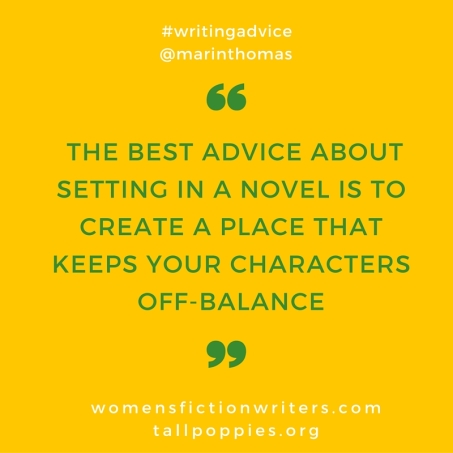
I knew Roslyn’s story would end up on the island – I knew she would go into a kind of exile and I’ve always loved the Georgia coast and its history. I imagined Roslyn’s need for that kind of isolation, and her need for great beauty. And I wanted it to be a place that would keep her off balance so she’d have to struggle to understand it and meet its demands. Her memories of the Appalachian Mountains and her grandmother are her touchstone, but she feels she can’t return to that place and the loss of her grandmother is very fresh. I needed a place that Roslyn believed was a complete departure. What she discovers on the island is that the people and even the land itself are dealing with the same issues.

I’d always been fascinated by the idea that the Sea Islands shift and change, the idea of the alligators roaring season, the romance of the great live oaks, and then there was the element of superstition that lent itself to Roslyn’s haunting. The island was like going back to the mire from which we all emerge. I chose the island setting so she could fight her way back from her loss, physically and psychologically. That’s what Roslyn’s character ultimately faced – having to come out of a tragedy, transformed.

Manny’s Island is actually loosely based on an island where a friend has a beach house. There are no cars on the island and you get there by boat and yes, there is a shell ring. That was where the story of Damascus and the Trezevant family were always set in my mind. I’d written a good part of the first draft before Roslyn’s memories in Glenmary, Tennessee, began to surface. Then I understood, as with everything else in the novel, that the two seemingly contradictory environments and cultures would serve as mirrors for one another – just as the characters tend to hold up mirrors to one another. Some of this was written intentionally, but a great deal of it evolved with the story.

On a personal (and pathetic and morbid) note, I was a teenager vacationing on Jekyll Island, Georgia, the summer I learned I had severe scoliosis. I was a dancer and thought I would make a career teaching one day, but my disease changed some things and altered my journey. (It’s all good!) But maybe I chose those islands for that reason, too. Before you start feeling all sorry for me, let me add a little bit more of a cerebral explanation, because it makes me seem really smart for a southern girl.

Throughout history there have been tales of women who turned into mermaids or serpents or sirens. Roslyn’s character seemed to me this kind of woman – someone very sensual and visceral, someone who mesmerized and lured and led people without trying, and was feared and criticized for it. So I saw her as a kind of displaced, exiled mermaid and she needed the sea to heal her. Kind of corny, right? Oh, but wait and listen to this.

I’d incorporated some seriously long-standing mythology into my contemporary work. In particular, after the book was finished, I discovered shocking similarities between The River Witch and the enduring myth of MELUSINE (And doesn’t that just sound like a southern name?), a cursed maiden living on a lost island who took the shape of a serpent when bathing. This dual feminine nature – the idea of a beautiful woman with a terrible secret, an unfortunate lover, a woman with a wailing song, one who bridges the gap between known and unknown realms, who has lost her children and wanders in exile because her darker nature has been revealed – applies not only to the main character, Roslyn, but to all the women in the novel in various ways. Inadvertently, I crafted the same old myth, incorporating my own culture and environment of the Appalachian foothills and the Georgia coast. I love that! I think it stands as proof that our stories are timeless.

Or maybe the scoliosis just left me twisted and I’d had too much Starbucks (Melusine is the split-tailed gal on their logo) and needed a beach vacation. That is, after all, my natural state. See, you should have asked, “Do I see myself in any of my charcters?”

No, I did not bury my baby or anybody else’s baby with a garden spade. No, I am not a witch. Yes, I did spend my childhood with kittens popping out of the kitchen cabinets. Call me later. We’ll talk.

Amy: Your publisher is Belle Bridge Books. I’ve read quite a few of Belle Bridge authors. Can you tell us how you came to work with them and what the experience has been like with a small(er) publisher?

Kimberly: Bell Bridge is a phenomenal advocate for authors and I couldn’t have been luckier than to sell The River Witch to them. The work was submitted to all the major NYC houses and while it was received well enough, and often I got requests to see it again if I would revise, but over time and many revisions, I began to feel the story was losing its integrity. I couldn’t bring myself to change it anymore. I knew I either had to sell it or shelve it and I couldn’t stand to put Damascus in a drawer. So, I left my agent, who wasn’t yet open to submitting to a small press – which nearly put me in an early grave, I was so terrified. And I sent it to Bell Bridge because of their reputation and the growing respect for their small press in the publishing community. During the time I waited to hear back from them, I worked on a new project and queried other agents with my work in progress. It was truly a writer’s dream when I got the offer to publish The River Witch and began working with my current agent within the same week.

My experience with Bell Bridge has been one of mutual respect and such authentic enthusiasm for my work. I am very sure that I made the right decision for this book and I enjoy a candid relationship with my publisher that I’ll always treasure. I have another short piece due out in an anthology with them in late Spring 2012.

Amy: We talk a lot on this blog about the big umbrella of women’s fiction and obviously much of what’s deemed “Southern Fiction” falls under that realm.  What’s your definition of women’s fiction in general?  And another question, what’s the special ingredient that makes it Southern fiction? Is it just the setting or is there more? 

Kimberly: The label or genre of Women’s Fiction is such a hot button right now in certain circles, with people being offended left and right. Writers are in two camps on this one. In the one camp, you’re up on a soap box about equality and women getting a fair shake, which is very relevant. These writers are embracing the genre of women’s fiction as a statement and a fact. Because, wouldn’t it be nice if we lived in a world where all folks just said, “Oh, women’s fiction! That’s wonderful! That’s important and necessary, wise and intellectual, and tells the beautiful stories of our mothers and daughters!” Boy, do I agree.

In the other camp you have writers who get prickly and defensive because they’re writing books that are tagged as women’s fiction instead of literary or general fiction, like that’s limiting, or worse, degrading. Like being a female writing about feminine issues is going to cost you your literary prowess. I’m with you fellers and fully annoyed by this mindset. And offended that because something is quintessentially feminine that it must be less than. It’s a gravely naïve perspective and sadly offensive.

Between you and me, my nine times great grandmother was a celebrated Cherokee Indian named NANCY WARD (Look her up. Trust me.) who picked up her husband’s weapon when he fell in battle and went to war alongside the men in her tribe. People are always so affected by that story and generally say in wonder, “What a woman!” I always thought that was strange because it seems to me every woman I know is doing that same thing in one way or another, every day. What I’m saying is, it’s not a new battle, girls.

The sad fact is, writers who tackle work that is based in women’s themes are irrevocably stuck in the middle of the debate. Maybe one day the writers and stories will be valued simply because they were written, and not because of the way they were marketed.

Personally, I never set out to write any one genre, I just wanted to tell a story that gave voice to the experiences of these characters, which in my opinion, is what all writers set out to do regardless of their sex. I am a woman and I write fiction. Plenty of men write fiction from a woman’s point of view. Does it make it less than? Would my work be more influential if it were written from the perspective of a male character? I don’t think so. This book definitely and intentionally addresses women’s lives – their journeys and traditions and myths – but the novel also looks at family and broader ideas such as culture and divinity and losing the land. All human experiences. I don’t think that’s limiting at all. I think it’s powerful. If that’s women’s fiction, sign me up.

As for what makes a work southern fiction? It’s kind of a mystery, isn’t it? I think maybe it’s the accent. Oh, and bacon grease. (Girls, I tried to leave some obvious examples of true southern literary WOMEN’S FICTION genius, because ya’ll know you shouldn’t be listening to me.)

Amy: What’s your best advice for aspiring authors of women’s fiction of all kinds?

Kimberly: Trusting the process. That’s kind of like trying to convince a woman she doesn’t really want an epidural because the natural process of labor is beautiful and rewarding, but seriously, it’s true. I keep trying to read something or watch some presentation that will give me the secret, but that’s just stupid. No one writer’s process is the same just like no two books are the same. There’s no use rushing it. And I think especially with stories about women’s experiences you’re going to be going in circles. The journey is cyclical, dizzying, and often feels like you as the author are backtracking. It’s easy to lose perspective. For me, I’m a global thinker and I always begin with this broad idea, a kind of amorphous vision of a work and I want to get to the finished piece in this neat, controlled way that just never happens. How could it? That’s just not the nature of a woman. I have to force myself to relax in the bog of my imagination until something floats to the top that I can latch on to. And all that time, I’m convincing myself I’m not crazy and secretly want to just call up KAYE GIBBONS (look her up, too, ya’ll) and beg her to go on and write the book for me overnight, because it will be that easy for her. I have to know that I’m going to come full circle, and that I am an idiot kind of writer who is going to do it all the hard way. And then I have to hope I’m eventually going to be smart enough to write the book of my dreams, because when I’m writing I always know I’m not smart enough. I have to let the book teach me something first. So my advice is: 1) Trust the process 2) Expect it to make you crazy 3) Emerge with the wisdom of your heart as the power in your story.

Writing the book will make in you the wisdom to write the book.

Until, of course, you get the idea for the next one. Then it’s just you and Richard Marx all over again, Sugar. I suggest some Starbucks and a beach vacation. Email me. I’m there.

Kimberly Brock is a former actor, special needs educator, and native to the north Georgia foothills. Her debut novel, The River Witch, is a southern mystical work set against the backdrop of Appalachia and the Sea Islands. Her work has appeared in the anthologies “Summer in Mossy Creek” and the forthcoming, “Sweeter Than Tea”. She spends her non-writing time enjoying her husband and three children, and encouraging storytelling in all its many forms. Kimberly lives north of Atlanta, where she’s made her home for the last eight years. To learn more, visit her website at kimberlybrockbooks.com

Follow

Get every new post delivered to your Inbox.

Join 256 other followers